In Force Security Expands Its Global Medical & Humanitarian Support
Framework to Protect Life in the World’s Most Challenging Environments
The modern world has entered a phase in which crises unfold not gradually, but suddenly and violently, disrupting the fragile systems on which communities depend. Natural disasters strike with unprecedented intensity, humanitarian emergencies erupt in regions where infrastructure collapses under pressure, and global health systems strain to support populations facing instability, displacement, or deprivation. In these environments, the presence of disciplined, medically aware, emotionally intelligent protective personnel becomes not a luxury, but a necessity. Recognising this global transformation, In Force Security developed Guardians for Life, an international medical and humanitarian support framework designed to deliver stability, safety, and structure in moments where human life hangs delicately between order and chaos.
Guardians for Life is built on an unwavering commitment:
to protect life wherever life is most at risk.
This initiative extends well beyond traditional corporate responsibility. It is a doctrine rooted in compassion, global citizenship, crisis discipline, and the belief that every human
being deserves a chance to survive, recover, and rebuild—even in the harshest environments on Earth.
A Global Crisis Landscape Redefined
Why the World Needs a New Type of Protector
Humanitarian emergencies no longer follow predictable patterns. They now emerge from a combination of environmental shocks, geopolitical instability, economic collapse, public health crises, and mass displacement. While humanitarian organisations rush to provide food, shelter, and medical care, their missions are often hindered by unsafe conditions— crowds overwhelmed with fear, relief centres destabilised by desperation, criminal opportunism targeting vulnerable individuals, and infrastructure failures that leave entire regions without emergency support.
In these high-pressure environments, traditional security models fall short. What is required is a hybrid approach—one that merges security discipline with medical readiness, humanitarian etiquette, and crisis psychology. Guardians for Life embodies precisely that hybrid, offering a stabilising force capable of supporting medical teams, supplementing relief efforts, and creating safe zones where civilians can receive vital assistance.
The initiative is not designed to militarise humanitarian spaces; it is designed to protect them, ensuring that compassion can function without being overwhelmed by disorder.
The Philosophy Behind Guardians for Life
Security as a Tool for Healing, Stability, and Human Dignity
Guardians for Life is grounded in a philosophical foundation that distinguishes it from all conventional security operations. At its core is the belief that protection must enhance, not overshadow, humanitarian work. Officers deployed under this programme undergo a transformation in mindset: they must approach each mission not as an assignment, but as an act of service to humanity.
These officers are trained to view the individuals in front of them not as crowds to control, but as families in crisis, children in fear, elderly individuals in disorientation, and communities struggling for survival. They learn that stability, structure, and medical support delivered with compassion can dramatically influence survival rates, psychological recovery, and social coherence.
Every decision—from where officers stand, to how they speak, to how they engage emotionally with vulnerable individuals—is guided by a doctrine of empathy. Guardians for Life is not security meant to impose—but security meant to uphold, comfort, and protect.
Crisis Intelligence and Medical Preparedness
Supporting Global Deployments Through Deep Situational Awareness
Every Guardians for Life deployment begins with a detailed intelligence cycle, tailored specifically to medical and humanitarian operation requirements. Specialists analyse:
- regional disease outbreaks and transmission patterns,
- local healthcare system capacity,
- environmental and infrastructure vulnerabilities,
- cultural considerations affecting medical engagement,
- historical patterns of crowd behaviour during aid distribution,
- criminal or militant presence near crisis zones,
- and potential exploitation risks for vulnerable populations.
Unlike standard security intelligence, this analysis explores how instability affects human life directly—from the availability of medicine, to the movement of displaced families, to the psychological impact of prolonged uncertainty. These insights help teams anticipate where medical support will be needed most, where volunteer teams may be at risk, and where protective presence can reduce suffering and stabilise operations.
This medically oriented intelligence approach creates a form of protection that does not merely react to crises—it prepares for them with precision.
The Human Element: Officers Trained for Crisis Sensitivity
Where Medical Awareness Meets Emotional Intelligence
The officers who form the backbone of Guardians for Life undergo some of the most specialised and emotionally demanding training within the In Force Security ecosystem. They are prepared not only to respond to physical incidents, but to engage with suffering in a way that reinforces dignity and reduces trauma.
Their training includes:
- psychological first aid,
- trauma-informed communication,
- emotional stabilisation techniques,
- patient-flow management in high-density environments,
- assisting overwhelmed families,
- providing assurance to individuals in shock,
- de-escalating fear-driven behaviour,
- supporting medical triage operations,
- and recognising early warning signs of fatigue or breakdown among volunteers.
This training builds officers who are not simply skilled—they are emotionally capable, compassionate, and resilient.
They understand that every individual they interact with is carrying not only physical vulnerability, but emotional weight: fear for family members, confusion about the crisis, and grief for what has been lost. Recognising these dynamics is essential to maintaining stability in humanitarian environments.
Supporting Medical Teams on the Front Line
Creating the Structure That Allows Healing to Occur
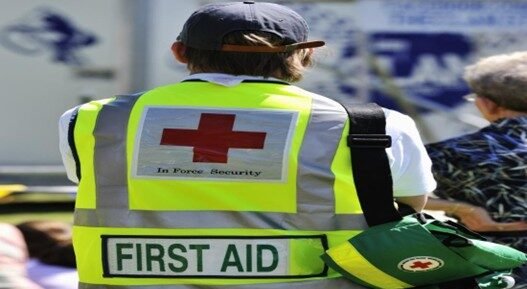
Medical professionals entering crisis zones face extreme conditions: limited resources, high stress, overwhelming caseloads, communication barriers, and environments that shift unpredictably. Guardians for Life provides the structured support these professionals need to focus on their core mission: saving lives.
Officers assist with:
- protecting medical teams from overcrowding or aggression,
- organising orderly patient queues,
- guiding displaced families to the appropriate care points,
- ensuring vulnerable individuals reach medical attention,
- safeguarding equipment and medication,
- assisting with emergency extractions,
- and helping maintain a calm environment in treatment areas.
These contributions dramatically improve the efficiency and safety of humanitarian health operations. In many cases, the presence of Guardians for Life officers can mean the difference between a chaotic medical centre and a functioning one.
Coordination With Humanitarian Networks Across Continents
Ensuring Interoperability in Pressure Zones
Humanitarian missions rarely operate under a single command structure. They typically involve:
- international NGOs,
- local authorities,
- community leaders,
- religious organisations,
- volunteer groups,
- medical institutions,
- international coalitions,
- and global relief networks.
Each operates with its own priorities, constraints, and capacities. Guardians for Life officers serve as the stabilising link between these actors, promoting communication, order, and alignment. Their presence reduces duplication of effort, minimises operational friction, and helps ensure that aid reaches those who need it without delay.
Through this interoperable approach, In Force Security enhances the impact of every humanitarian actor involved.
Stabilising Environments Where Hope Is Fragile
Preventing Panic, Protecting Vulnerable Individuals, Preserving Calm
Humanitarian environments can deteriorate quickly. People who have lost everything may react out of fear, desperation, or confusion. Families may be separated, creating emotional overload. Children may panic. Elderly individuals may struggle to comprehend the situation. Criminal groups may exploit the chaos.
Guardians for Life officers are trained to sense these emotional undercurrents. Their mission is to stabilise—not through intimidation, but through reassurance, presence, and leadership. They help individuals feel seen, heard, and supported. They use calm communication to defuse tension, reduce panic, and guide communities through uncertainty.
Their ability to create order, even in the midst of crisis, is one of the defining traits of the initiative.
A Long-Term Vision of Humanitarian Protection
Beyond Disaster Response: Building Durable Stability
The long-term vision of Guardians for Life extends beyond the immediate crisis zone. The initiative seeks to:
- strengthen community resilience,
- promote safety education,
- support youth stability programmes,
- assist in rebuilding social confidence,
- and contribute to restoring safe civic environments.
Recovery is not measured solely by the distribution of aid; it is measured by the restoration of dignity, independence, and psychological stability. Guardians for Life is designed to support this long-term evolution.
A Commitment to Protecting Life Everywhere
A Global Responsibility Beyond Borders
Guardians for Life reflects a principle that lies at the heart of In Force Security’s identity:
protection must reach those whose need is greatest.
The initiative represents a promise to serve—not only clients, governments, or corporations, but humanity at large. Whether in a refugee camp, a disaster zone, a medical centre under pressure, or a community facing instability, the mission remains unchanged:
To protect life where life is most fragile.