
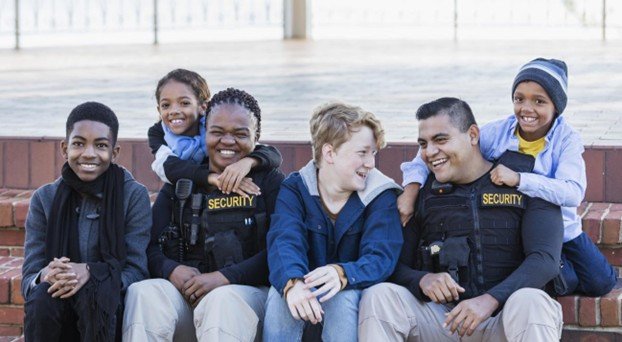
In Force Security Strengthens Its Global Community Protection & Urban Stability Framework Through the Safe Streets Initiative
The modern urban environment is undergoing a profound transformation. Cities across continents—whether in highly developed nations or emerging regions—are experiencing complex shifts in public behaviour, social dynamics, and safety demands. Population density, economic tension, social fragmentation, rising urban migration, and the accelerating speed of digital information all contribute to environments in which public order can be fragile and easily disrupted. Recognising these global realities, In Force Security developed the Safe Streets Initiative, an international framework designed to reinforce community stability, enhance environmental awareness, and restore trust between security professionals and the people they serve.
Safe Streets is more than a patrol model. It is a community-focused philosophy rooted in responsibility, presence, and partnership. Rather than emphasising enforcement, the initiative emphasises engagement, stabilisation, and proactive, human-centred protection. It reflects the belief that security cannot be imposed on a community—it must be built with it, through understanding, communication, and a visible, reliable presence that the public recognises as both protective and respectful.
This editorial explores the deeper structure, intention, and operational sophistication behind Safe Streets—a programme designed for a world where public safety is not simply a civic expectation, but a shared global responsibility.
Understanding the Modern Urban Landscape
Why Communities Around the World Require a New Model of Protection
Urban areas have grown rapidly over the past decade. With growth comes diversity, opportunity, innovation—and new challenges. Many cities today are characterised by:
- higher population density,
- increased economic inequality,
- social pressure points,
- unpredictability in public behaviour,
- communication overload through digital networks,
- misinformation that spreads faster than facts,
- and a general decline in trust toward public institutions.
This combination creates volatile environments where a minor incident can escalate suddenly, and where the absence of visible, responsible security presence can lead to heightened anxiety among residents. Communities seek reassurance, clarity, and the sense that someone is invested in their wellbeing.
Safe Streets recognises that public safety is no longer just the responsibility of law enforcement or government agencies. It is a shared ecosystem in which private security organizations play a critical role—not as replacements for police, but as stabilising partners capable of supporting communities proactively.
A Philosophy of Presence, Not Pressure
Rebuilding Public Trust Through Consistency and Respect
One of the most significant problems in modern security is the perception of distance between security personnel and the people they protect. In some areas, the presence of uniformed personnel is seen as intimidating; in others, it is considered insufficient. Safe Streets bridges this gap through a philosophy centred around non-intrusive presence, relationship-building, and predictable visibility.
Officers within the initiative are trained to:
- observe without escalating,
- communicate clearly and respectfully,
- support rather than confront,
- guide rather than dictate,
- and maintain calm even in emotionally elevated situations.
This human-centric approach ensures that residents see officers not as outsiders, but as members of the community who walk the same streets, understand the environment, and have a genuine interest in the wellbeing of those who live and work there. Over time, this consistency creates familiarity, and familiarity builds trust—the most valuable currency in community protection.
Intelligence-Led Community Stability
Understanding People, Not Just Places
Safe Streets integrates community intelligence models used by international security agencies: patterns of local behaviour, peak foot traffic, environmental cues, social pressure points, and indicators of emotional unrest. Officers are trained to recognise subtle changes in public behaviour, including:
- altered crowd dynamics,
- increased agitation or argument clusters,
- individuals displaying distress signals,
- early signs of conflict escalation,
- unusual loitering or hostile surveillance,
- shifts in group movement patterns.
This behavioural awareness enables them to stabilise situations before issues evolve into incidents. Stability becomes proactive rather than reactive.
Community security is not about controlling people—it is about understanding them.
Partnership with Local Institutions
The Collaborative Heart of Safe Streets
Urban safety requires coordination. Safe Streets officers work alongside:
- local councils and municipalities,
- community leaders,
- property managers,
- NGOs and social support networks,
- educational institutions,
- local businesses,
- and police structures (when required).
This network creates a circle of support around the community. Officers identify concerns that councils need to address, report infrastructural hazards, support public events, assist residential complexes, and offer quick intervention where needed.
Unlike enforcement systems, partnership-based security strengthens the community’s ability to police itself, making the environment safer through cooperation, not confrontation.
A Stabilising Influence in Moments of Tension
Preventing Escalation Through Emotional Intelligence
The most dangerous moments in public safety are not always rooted in crime—they often stem from human emotion: frustration, confusion, embarrassment, fear, confrontation, or miscommunication. Safe Streets prioritises emotional intelligence as a core operational tool.
Officers are trained to:
- de-escalate verbal confrontations,
- mediate small disputes before they grow,
- separate conflicting individuals safely,
- calm anxious crowds,
- and provide reassurance during local disruptions.
Their job is not to intervene with force, but to anticipate and diffuse tension. This creates stability in environments where incidents could easily escalate.
Safe Streets officers do not simply secure streets—they steady them.
Environmental Awareness s Urban Risk Interpretation
The Science of Observing the Modern City
Cities communicate continuously through patterns: the way people move, the times they gather, how they react to noise, lighting, and unexpected events. Safe Streets integrates environmental risk interpretation into its operational doctrine. Officers study:
- lighting patterns and their impact on public behaviour,
- access routes that create natural bottlenecks,
- sightlines that obscure safety,
- public spaces vulnerable to antisocial activity,
- seasonal behavioural fluctuations,
- social media trends that may influence street behaviour.
This allows Safe Streets to anticipate issues and adjust deployment locations with precision.
Urban safety, at its highest level, is a science—and Safe Streets treats it as such.
Supporting Vulnerable Groups
Protection Through Empathy and Inclusion
Communities are not monolithic—many individuals require tailored awareness, including:
- elderly residents,
- school children,
- individuals with disabilities,
- migrants unfamiliar with local norms,
- vulnerable families,
- people experiencing homelessness,
- and individuals facing emotional distress.
Safe Streets officers are trained to engage with vulnerable groups respectfully, discreetly, and supportively. They often become familiar faces—people community members feel comfortable approaching for help, information, or reassurance.
This human connection elevates Safe Streets beyond a protective presence into a
community anchor.
Operational Professionalism s Discretion
What Elevates Safe Streets Above Conventional Patrol Models
In Force Security delivers Safe Streets through a team of highly trained personnel who combine professional standards with human sensitivity. Their operational approach is based on:
- discreet communication,
- disciplined movement,
- clear awareness of surroundings,
- respect for cultural and social expectations,
- avoidance of overbearing behaviour,
- and strict confidentiality.
Every officer understands that professionalism does not mean distance—it means consistency, integrity, and readiness.
Reducing Fear and Increasing Public Confidence
Why Visible Security Matters
One of the most measurable outcomes of community-based protection is the psychological impact. When individuals see trained, calm, respectful officers patrolling their neighbourhood, they experience:
- increased confidence in their environment,
- reduced stress when navigating public spaces,
- a sense of safety during evening or night hours,
- comfort when children or family members travel alone,
- trust that someone is paying attention.
These psychological factors create healthier, happier, more connected communities. Safe Streets does not only secure environments—it improves quality of life.
A Global Vision for Public Safety
Expanding the Model Across Borders
Because urban risk patterns are increasingly similar worldwide—whether in America, Europe, Asia, Africa, or the Middle East—the Safe Streets Initiative is designed for international scalability. It adapts to cultural expectations, legal frameworks, and local norms while maintaining a unified standard of:
- respect,
- presence,
- responsibility,
- and stabilising influence.
This allows In Force Security to deploy Safe Streets teams in diverse environments while maintaining consistent quality, ethos, and operational discipline.
A Future Built on Trust, Safety, and Community Partnership
Safe Streets stands as one of In Force Security’s most impactful and meaningful programmes. Its mission is rooted not in enforcement, but in dignity; not in authority, but in support; not in distance, but in real, human connection. It represents the belief that communities thrive not through force, but through respect, presence, and thoughtful engagement.
In a world where uncertainty can emerge anywhere, Safe Streets offers the stability people need to feel safe, confident, and respected. It brings structure to environments where subtle tensions can escalate, and reassurance to individuals who deserve peace in their daily lives.
Safe Streets protects more than streets—
it protects the spirit of the community.